
FRAGILITY
Pilar Viedma
Spain
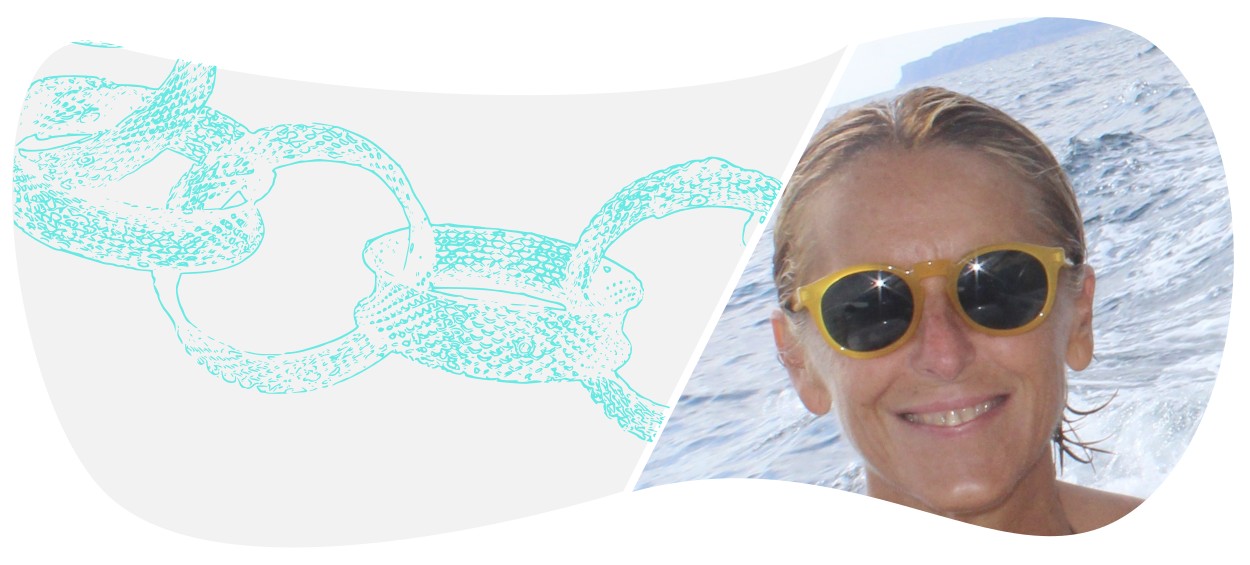
In my work, I explore different ways of applying color to metal with the aim of demonstrating that, in artistic jewelry, what matters is not the material itself, but its ability to communicate with it. A few years ago, I began using the copper mesh for its special texture, which allows it to be painted, and for its malleability, which lets me investigate the relationships between form and color.
Using new materials can be a daunting challenge. I continue to research how to fix color on different metals and textures, cold connections that don’t damage already painted pieces, and techniques that allow the resulting shapes to be maintained over time. I have begun using aluminum mesh, a material used in construction, which remains malleable but, when worked with a hammer, stampers, and anticlastic stakes, gains greater hardness. These necklaces, made with colored rings held together with rivets, a mechanical connection technique, heighten the senses and remind us of our own vulnerability. Embracing one’s own fragility becomes a starting point for sensitivity, and far from being a flaw, fragility reveals itself as a powerful tool for creativity and connection with one’s environment.
Using new materials can be a daunting challenge. I continue to research how to fix color on different metals and textures, cold connections that don’t damage already painted pieces, and techniques that allow the resulting shapes to be maintained over time. I have begun using aluminum mesh, a material used in construction, which remains malleable but, when worked with a hammer, stampers, and anticlastic stakes, gains greater hardness. These necklaces, made with colored rings held together with rivets, a mechanical connection technique, heighten the senses and remind us of our own vulnerability. Embracing one’s own fragility becomes a starting point for sensitivity, and far from being a flaw, fragility reveals itself as a powerful tool for creativity and connection with one’s environment.
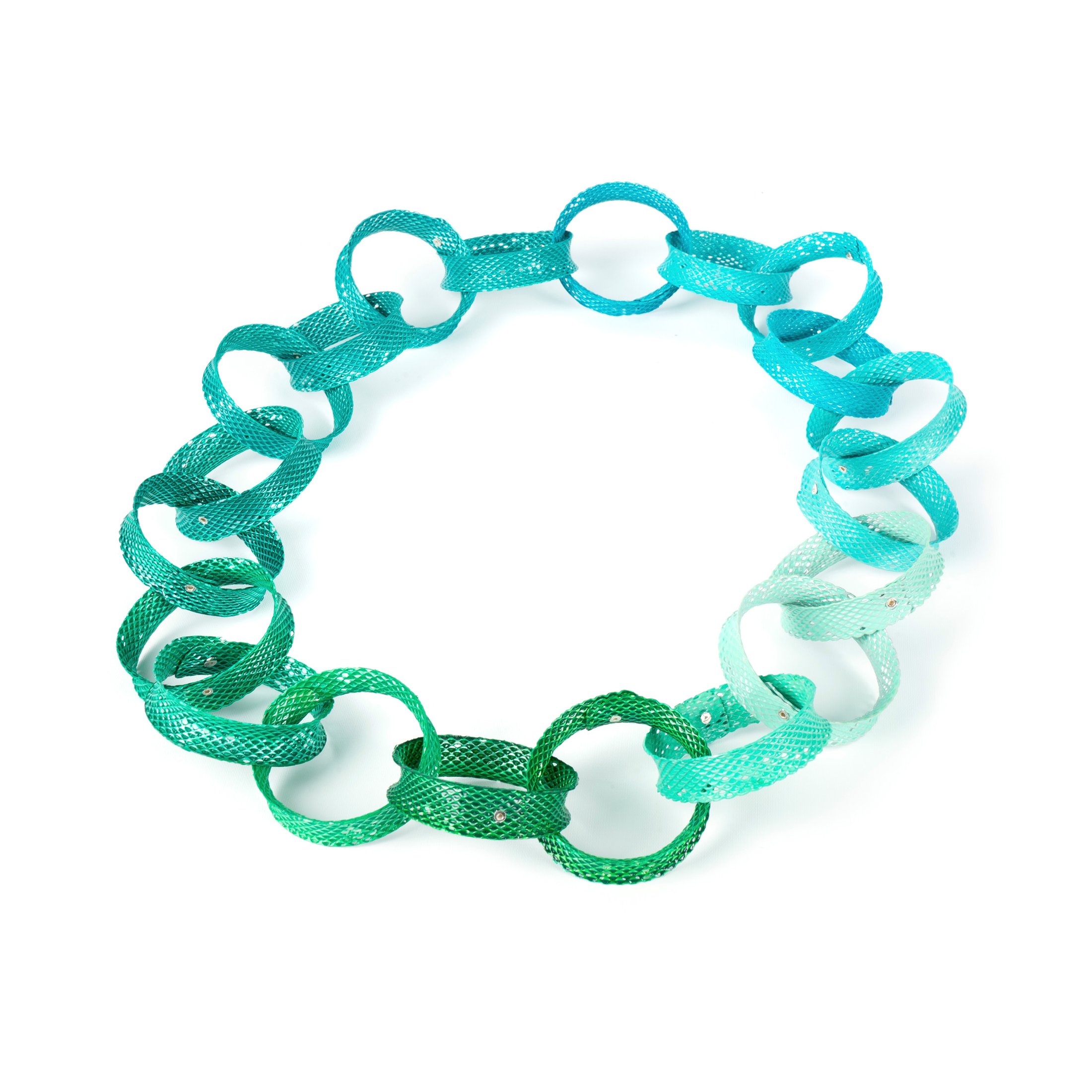
Necklace « Green Colourscapes », 2025
800 mm x 400 mm x 12 mm mm / 30 gr
Aluminum mesh, earthenware paint, silver
Traditional jewellery techniques and artistic techniques to give color to metal
Photo : @creatyestudio
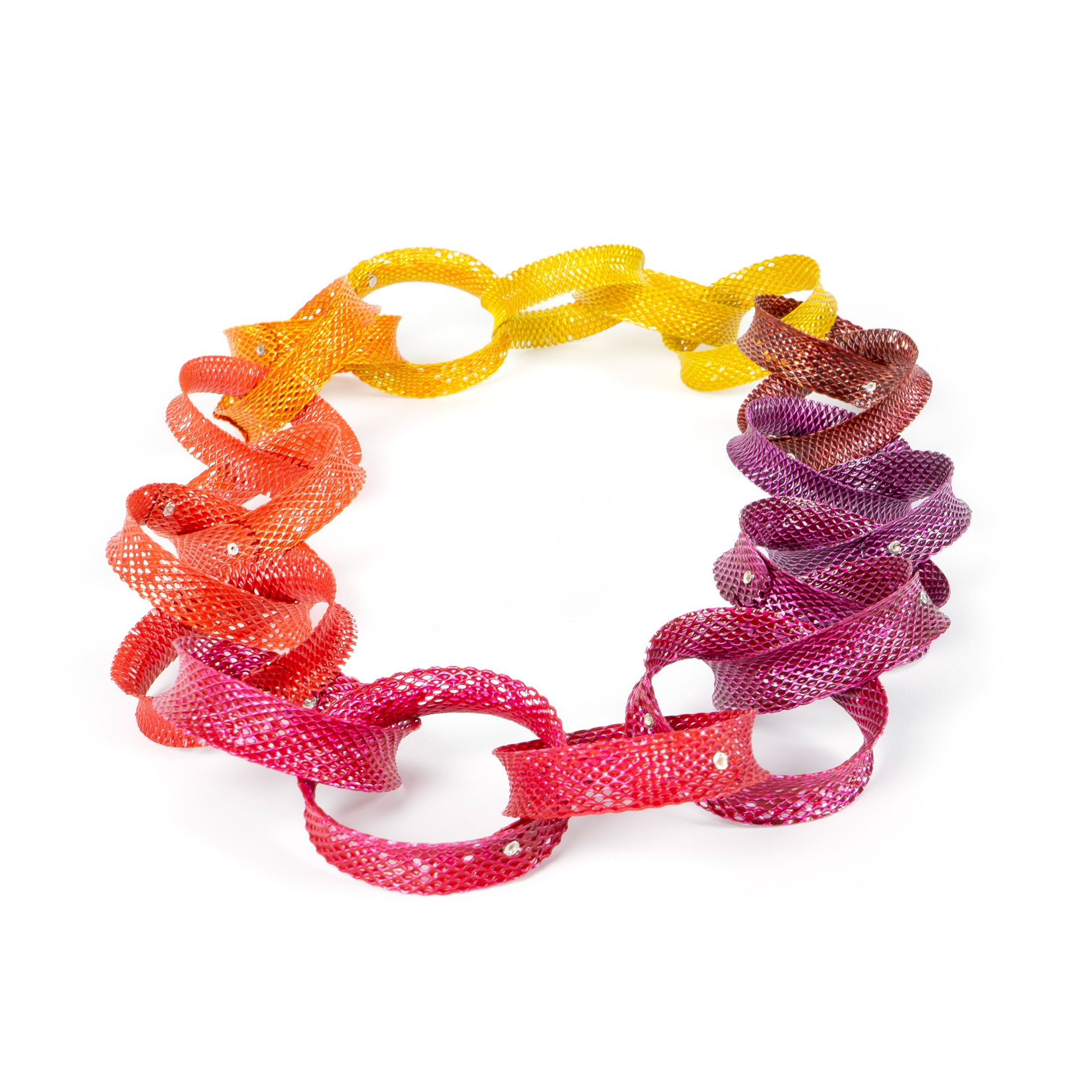
Necklace « Warm Colourscapes », 2025
800 x 400 x 12 mm / 31 gr
Aluminum mesh, earthenware paint, silver
Traditional jewellery techniques and artistic techniques to give color to metal
Photo : @creatyestudio